

Drain flies don't come from your drain. They come from what's growing in it.
- Dissolves the biofilm drain fly larvae feed on — the actual breeding site
- Bacillus biosurfactant: non-corrosive, non-hazardous, septic-safe
- 1 oz per drain, overnight — visible reduction in 3–7 days
- Also clears the grease and sugar buildup behind slow drains and odor
$21.00
Liquid. Pour it in — do not mix with bleach.
- 1 oz per drain, overnight — not a powder
- Repeat weekly for 4 weeks to outlast the fly life cycle
- Septic-safe. Dissolves the biofilm flies breed in.
- Visible reduction in 3–7 days
Pure B.S. (Bio Surfactant) is an environmentally safe and user-friendly drain treatment formulated to eliminate buildup of solids. By eliminating solids, drains can be kept free of organic matter that cause clogs and odor and attract drain flies. The base of Pure B.S. is a biological surfactant prod...
Keep your septic and waste systems flowing clean.
Why the flies keep coming back after you treat the drain
You're killing the adults, not the nursery
Sprays, foggers, and fly traps kill the drain flies you can see. They do nothing to the eggs already laid in the pipe — up to 300 of them in the last 48 hours. Adults re-emerge on a 2–3 week cycle, which is why it feels like they never left. They didn't. They hatched.
Boiling water and vinegar don't touch biofilm
Biofilm is a structured matrix of bacteria, polysaccharides, and lipids bonded to the pipe wall. Boiling water cools on contact with cold pipe and runs right over it. The baking soda and vinegar reaction fizzes for a few seconds and dissipates — it has neither the dwell time nor the chemistry to release the film. Neither dissolves what the larvae are eating.
Bleach creates a second problem
Bleach kills surface bacteria but rinses away before it penetrates the biofilm matrix. It also corrodes metal drains and, if you're on septic, kills the anaerobic biology your tank depends on to function. You trade a fly problem for a tank problem.
How It Works
| Feature | What It Means for You |
|---|---|
| Bacillus-produced biosurfactant | Lowers the surface tension holding biofilm to the pipe wall, so the film detaches and washes away with normal water flow — the breeding site is physically removed, not just disinfected |
| Beneficial bacteria included | The Bacillus strains outcompete the harmful microbial populations that produced the biofilm in the first place, so it re-forms far more slowly |
| Non-corrosive, non-hazardous | Safe on PVC, cast iron, and copper. No fumes, no gloves-and-goggles routine, safe to use in an occupied kitchen |
| Septic and grease-trap compatible | Unlike bleach or caustic drain openers, it's compatible with anaerobic digestion — it won't wipe out the biology in your septic tank downstream |
| Dissolves fats, oils, grease, and sugar | The same organic buildup that feeds drain flies is what causes slow drains, clogs, and drain odor — treating one treats all three |
Application: Pour into drain, soak overnight, rinse — no foaming applicator needed for household drains
Active drain fly infestation: • 1 oz per affected drain • Pour in at night and let it sit undisturbed 8+ hours • Rinse with hot water in the morning • Repeat weekly for the first month Why four weeks matters: • Eggs are already in the pipe when you start • The drain fly life cycle runs 8–24 days • A single treatment kills the current generation and misses the next • Weekly for a month outlasts the full cycle Commercial floor drains and grease traps: • Increase to 2–4 oz per drain, weekly • Bulk packaging available for multi-site facility programs Maintenance: • 1 oz per drain, monthly, once the infestation is cleared
Calculate Exact Quantity for My AreaThe Fly Is Not the Problem
Almost everything sold for drain flies targets the adult insect. That is the wrong target. Adults live about two weeks and are weak fliers that rarely leave the room they hatched in. Killing them changes nothing about the drain, and the drain is where the next generation is already developing.
A female drain fly lays up to 300 eggs in 48 hours. Larvae hatch in about two days and mature into adults in as little as eight. That is why a drain nobody thought about can go from invisible to a visible swarm in roughly two weeks — and why a spray that “worked” on Monday is followed by fresh flies by the weekend.
Remove the Food Source and the Infestation Ends
Drain fly larvae eat biofilm. Take the biofilm away and there is nothing to eat, nowhere to lay eggs, and no next generation. That is the entire strategy, and it is the only one that holds.
The difficulty is that biofilm is genuinely hard to remove. It is not loose debris sitting in the trap — it is a structured matrix of bacteria, polysaccharides, and lipids adhered to the pipe wall, often well down the run of the pipe where no brush reaches. Hot water doesn’t dissolve it. Bleach doesn’t penetrate it. Caustic openers scour some of it away and leave a surface that regrows the film almost immediately.
A biosurfactant works differently. It attacks the bond between the film and the pipe, lowering the surface tension holding the two together until the biofilm releases and washes away in normal flow. The Bacillus bacteria that produce that surfactant stay behind and compete with the organisms that built the film, which is why treated drains stay clear longer than scoured ones.
Treat the Right Drain
The most common reason a treatment appears to fail is that it was applied to the wrong drain. Drain flies stay close to where they hatched, but “the bathroom” can mean the sink, the shower, the floor drain, or the overflow.
Dry each suspect drain, then tape a piece of clear packing tape across the opening overnight, leaving a small gap for airflow. In the morning, the drain producing the flies will have them stuck to the tape. Treat that one — and, since biofilm rarely grows in only one place, treat the others while you are at it.
If you have treated every drain and flies keep appearing, check the sources people forget: the washing machine drain pan, the dishwasher air gap, the refrigerator drip tray, the HVAC condensate line, and the basement sump pit.
Pour or Foam?
For a household drain, pour. The overnight soak holds product in the P-trap, and the trap and low points stay wet continuously, which is why treatment placed there keeps working overnight. The limit is the vertical tailpiece above the trap water line and the sink overflow channel — a pour rinses those for seconds, not hours.
Foam is the professional answer to that gap, because it expands into a space and clings to vertical wall. Virginia Tech Extension recommends a microbial foam for drain fly larvae for exactly that reason. We don’t sell a foaming applicator and won’t send you to a consumer one — foam that collapses in a minute is worse than a good pour, because it feels like you did more.
The free version of the same fix: pour at night, then take a stiff bottle brush to the tailpiece and overflow. Full walkthrough in how to get rid of drain flies.
Buying for a Facility
Commercial kitchens, food plants, and multi-site operations run a different version of this problem: floor drains and grease traps that are inspected, and drain flies that are a health-code finding rather than a nuisance. Dose those at 2–4 oz per drain weekly, and document the applications — a weekly treatment log is usually what a re-inspection wants to see.
We build recurring biosurfactant programs for facilities and multi-site operators. Email success@southlandorganics.com or call 800-608-3755.
Frequently Asked Questions
What causes drain flies in the first place?
Biofilm — the slimy microbial layer of grease, soap scum, hair, and food residue that builds up on the inside walls of your drainpipes. That film is what drain fly larvae eat and what adults lay eggs in. If you have drain flies, you have a drain that has grown a food source. The flies are the symptom; the biofilm is the cause.
Why do boiling water and baking soda not get rid of drain flies?
Because they don't remove the biofilm. Boiling water cools rapidly when it hits cold pipe and runs over the film without dissolving it. Baking soda and vinegar produce a short foaming reaction with almost no scrubbing effect. Both may kill some adult flies, but the eggs and larvae in the biofilm survive and hatch within days — which is why the flies appear to come back.
How does Pure B.S. get rid of drain flies?
Pure B.S. is a biosurfactant produced by Bacillus bacteria. It lowers the surface tension between the biofilm and the pipe wall, allowing the film to detach and wash away with normal water flow. Once the biofilm is gone, larvae have nothing to eat and adults have nowhere to lay eggs, so the drain becomes uninhabitable. The beneficial bacteria then outcompete the microbes that produced the biofilm, slowing how fast it returns.
How long does it take to get rid of drain flies?
Expect a visible reduction in 3 to 7 days and full elimination in 2 to 3 weeks. Treat weekly for the first month. This matters: eggs are already in the pipe when you start, and the drain fly life cycle runs 8 to 24 days, so a single treatment clears the current generation but misses the next one. Four weeks of weekly treatment outlasts the full cycle.
Is Pure B.S. safe for septic systems?
Yes. It is compatible with anaerobic digestion, which is the biological process a septic tank runs on. This is a real difference from bleach and caustic drain openers — those kill the bacteria your tank needs to break down waste, so clearing a drain problem can create a tank problem. Pure B.S. is also safe for grease traps, PVC, cast iron, and copper.
Do I need to call an exterminator for drain flies?
For a residential infestation coming from indoor drains, usually not. Pest-control sprays target the adult flies rather than the breeding site, so they treat the symptom. Call a professional if the source is outside the building — a broken sewer line, a cracked septic tank, standing water on the property — if the infestation persists after four weeks of weekly treatment of every drain, or if you are in a regulated facility that needs compliance documentation.
Can I use it for slow drains and drain odor, not just flies?
Yes, and it's the same mechanism. The organic buildup that feeds drain flies is the same buildup that slows your drains and produces odor. Dissolving the biofilm addresses all three at once. Pure B.S. breaks down fats, oils, grease, and sugar, which is why it also works on garbage disposals and commercial floor drains.
Do I need a foaming applicator to use Pure B.S. in a drain?
Not for a household drain. Poured in at night, Pure B.S. settles into the P-trap under your sink. The trap and low points stay wet continuously, which is why treatment placed there keeps working overnight. What a pour cannot do is keep the vertical tailpiece above the trap water line wet, or reach the sink overflow channel — foam fills and clings to those above-water surfaces, which is why Virginia Tech Extension recommends a microbial foam for larvae in spaces brushes and gels cannot reach. We do not sell a foaming applicator and will not recommend a consumer device, because useful foam depends on the equipment producing it as much as the chemistry. The free fix for the same gap: after pouring, run a stiff bottle brush down the tailpiece and scrub the overflow opening. Trap gets the soak, tailpiece gets the brush. Our drain fly guide walks through it in detail.
I replaced a waste line and still have drain flies. Why?
Replacing a section of pipe removes the biofilm in that section only. The breeding site is usually in something that was kept: the strainer body, tailpiece, P-trap, sink overflow, disposal connection, or the branch line above or below the new work. Identify the drain actually producing flies by taping clear packing tape over each suspect drain overnight with a small air gap, then inspect and scrub the retained parts. If that comes up empty, check sources outside the repaired line — HVAC condensate pan and line, sump pit, floor drains, refrigerator drip tray, or a leak keeping an area damp. A new line can also re-colonize if a fixture upstream keeps supplying organic material.
What won't Pure B.S. fix?
It dissolves organic buildup — biofilm, fats, oils, grease, sugar. It is not a drain opener and will not clear a physical obstruction: hair mass, wipes, mineral scale, tree roots, or a sagged or collapsed pipe. It also cannot correct a plumbing defect. If a drain is slow because the P-trap has dried out, a vent is blocked, or the line is improperly pitched, treatment will not change that — refill the trap or get the plumbing looked at. Recurring backups, gurgling, multiple slow fixtures at once, or sewage odor all point to a plumbing problem rather than a biofilm problem.
3–7 days
To Visible Reduction
2–3 weeks
To Full Elimination
1 oz
Per Drain, Per Week
A+
BBB Rating
Reviews
No reviews yet. If you've used this, your review is the one the next person reads.
Related Products

Alpet D2 Surface Sanitizing Wipes
Alpet D2 Surface Sanitizing Wipes are a ready-to-use, no-rinse, lintless wiping system for food contact and non-food contact surfaces. Alpet D2 Surface Sanitizing Wipes are available in a heavy duty 90-count wipe canister as well as a 160-count canister with thinner wipes. As with all Best Sanitizers wiping systems, the spring-loaded lid closes on its own to prevent the drying of wipes, helping to eliminate unnecessary waste. Clean and sanitize with one product Sanitizes food contact and non-food contact surfaces Kills 99.999% of Staphylococcus aureus, Escherichia coli, Salmonella enterica (formerly typhimurium) and Listeria monocytogenes as a food contact surface sanitizer Kills 99.9% of tested pathogens in 10 seconds as a non-food contact surface sanitizer 58% IPA/quat formula Ideal for water-sensitive equipment NSF listed D2 classification Kosher, Pareve and Halal certified Looking for a highly evaporative spray? Check out the Alpet D2 Surface Sanitizer Spray and Alpet D2 Quat-Free Surface Sanitizer Spray.
Best for: Poultry gut health & litter management
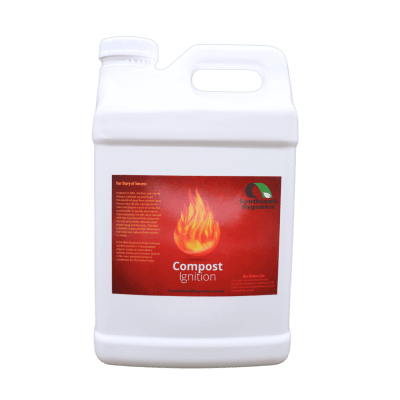
Ignition
Ignition accelerates the decomposition process, turning dead matter into life-giving fuel. Use Ignition on your compost piles to accelerate the composting process, or apply it directly to your soil to create a vibrant environment for a flourishing garden. Benefits of Ignition: Naturally-derived compost starter Easy-to-use liquid formula Manufactured in the United States Fast-acting Provides beneficial microbes for healthier, living compost Contains no synthetic nitrogens Decays organic materials and garden waste for faster results

PORT
PORT is a powerful outdoor restroom and holding tank treatment that provides rapid waste degradation and odor control. PORT efficiently and effectively breaks down solid waste, clears bio-solids in septic systems and opens up clogged pipes, often adding years between tank pumping. Benefits of PORT: Eliminates unpleasant odors rather than simply covering them up with perfumes or fragrances Harmless to human, animal and marine life Digests difficult compounds toxic to naturally occurring beneficial bacteria or existing sewage bacteria Breaks down difficult detergents, fats, oils, tissue and hydrocarbons with biological additives Reduces corrosion resulting from leaching hydrogen sulfide Non-corrosive and non-pathogenic Safe to handle and store Free from harsh chemicals PORT is also available in our Pour the PORT Septic Tank Treatment Subscription. PORT is a USDA Certified Biobased Product®. This means that it's made of primarily biological products and therefore considered an alternative to petroleum-derived products by the USDA. Southland Organics is fully registered with SAM.gov Entity ID: L9GTYJCHK2Q5
Best for: Septic & waste treatment
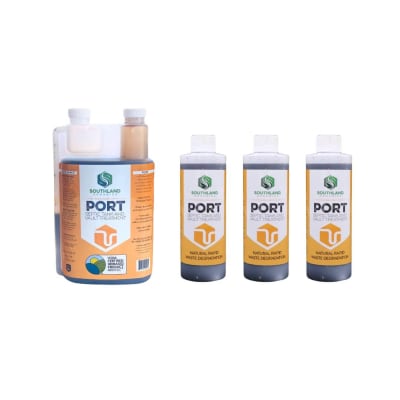
Pour the PORT
Pour the PORT is a simple septic tank treatment subscription program to maintain your septic system. Every four months, you will receive four bottles of PORT. You will receive one quart and three 8 ounce bottles. Upon arrival, simply pour the quart down your drain or toilet. After the initial application, pour one 8 ounce bottle down your drain or toilet each month. The quart will shock the system, and the 8 ounce bottles will maintain a happy system. Benefits of Pour the PORT: Breaks down human waste and toilet paper easily Uses beneficial bacteria—not harsh chemicals—to break down waste Eliminates unpleasant odors instead of covering them up with chemical additives Keeps your drain field safe for your pets and kids to play in PORT is also available outside of the subscription program in larger sizes. Shop more PORT options here. PORT is a USDA Certified Biobased Product®. This means that it's made of primarily biological products and therefore considered an alternative to petroleum-derived products by the USDA.
Best for: Septic & waste treatment

Talk to Mike Usry
Have questions about Drain flies don't come from your drain. They come from what's growing in it.? Our team has helped over 1,000 farms find the right solution. Call us or shop now.
Drain flies don't come from your drain. They come from what's growing in it.
$21.00