

Quick Answer: Humic Acid vs. Fulvic Acid at a Glance
| Property | Humic Acid | Fulvic Acid |
|---|---|---|
| Molecular Weight | High (10,000–100,000+ daltons) | Low (1,000–10,000 daltons) |
| Color | Dark brown to black | Golden yellow to light brown |
| Solubility | Alkaline solutions only (pH 7+) | All pH levels (water soluble) |
| Primary Function | Builds soil structure | Transports nutrients into cells |
| Best Application | Soil drench, granular amendment | Foliar spray, fertigation |
| Speed of Results | Weeks to months (soil building) | Days to weeks (fast uptake) |
| Where It Works | In the soil | In the soil AND inside the plant |
| Think of It As… | The foundation | The delivery truck |
The simple version: Humic acid improves where plants grow. Fulvic acid improves how plants eat.
Which Should You Use? A Decision Guide
Whether you choose humic or fulvic acid depends on your situation. Here's how to decide:
For Lawns
| Your Situation | Use This | Why |
|---|---|---|
| Compacted or clay soil | Humic acid | Loosens soil structure, improves water penetration |
| Yellow grass, nutrient deficiency | Fulvic acid (foliar) | Fast nutrient absorption through leaf tissue |
| New lawn establishment | Both | Humic builds root zone, fulvic speeds establishment |
| Ongoing maintenance program | Both | Humic in spring/fall soil applications, fulvic in summer foliar applications |
Southland Organics recommendation: Start with our Genesis Soil Conditioner as a soil foundation, add Omega foliar sprays during active growth.
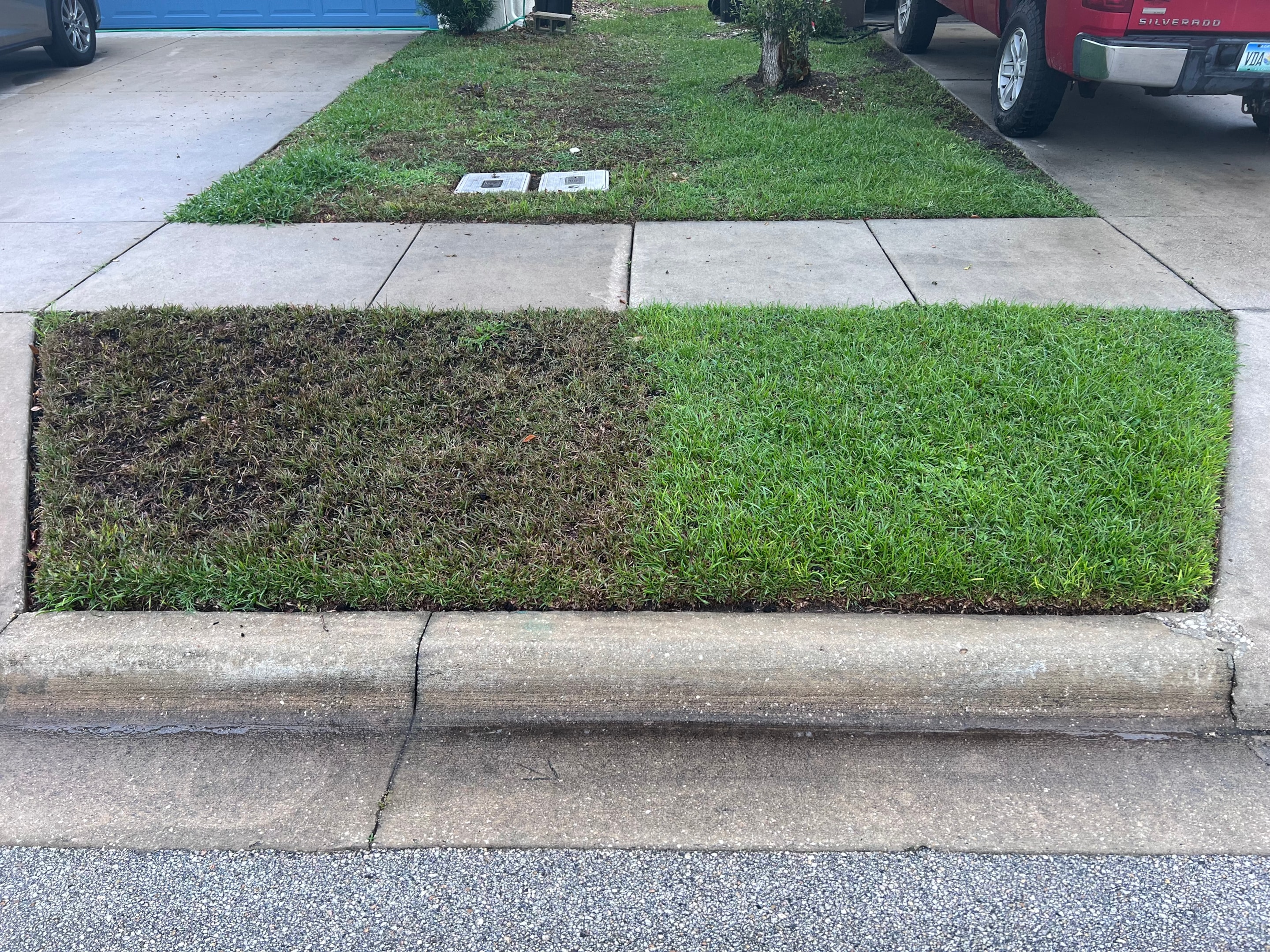
For Vegetable Gardens
| Your Situation | Use This | Why |
|---|---|---|
| Poor or sandy soil | Humic acid | Increases water retention and nutrient availability |
| Transplant shock | Fulvic acid | Reduces stress, speeds root development |
| Fruiting/flowering stage | Fulvic acid | Enhances nutrient absorption when demand is highest |
| Building beds for next season | Humic acid | Long-term soil improvement |
| Mid-season boost | Both | Soil drench with humic + foliar with fulvic |
Pro tip from our team: Mix Jump Start or Ultimate Tea with your liquid fertilizer. It acts as a carrier, improving uptake of other nutrients by 20–30%.
Learn more about how plants get nutrients and the importance of cation exchange capacity (CEC).
For Potted Plants & Containers
| Your Situation | Use This | Why |
|---|---|---|
| Potting mix looks tired/hydrophobic | Humic acid | Restores water absorption |
| Plants look pale despite fertilizing | Fulvic acid | Unlocks essential nutrients already present |
| Repotting or transplanting | Fulvic acid | Reduces transplant stress |
| Long-term container health | Both | Monthly humic drench + weekly fulvic foliar |
For Farms & Commercial Operations
| Your Situation | Use This | Why |
|---|---|---|
| Soil remediation / building organic matter | Humic acid | Cost-effective at scale for soil structure |
| In-season foliar program | Fulvic acid | Tank-mix compatible, fast ROI |
| Reducing synthetic fertilizer inputs | Both | Humic improves retention, fulvic improves efficiency |
| Starter fertilizer enhancement | Fulvic acid | Chelates nutrients, improves seedling uptake |
| Maximizing crop growth and crop performance | Both | Humic builds the foundation, fulvic delivers results |
Commercial application rates:
- Humic acid: 1–2 gallons per acre (soil applied)
- Fulvic acid: 1–2 quarts per acre (foliar) or 1 gallon per acre (fertigation)
See our soil conditioner products for golf courses and commercial turf.
What Are Humic Substances?
Humic substances are naturally occurring substances—the end result of nature's composting process. They form through the microbial metabolism of plant and animal matter over millions of years, resulting in concentrated organic matter packed with carbon and biological activity.
These substances form in ancient deposits like leonardite (a soft coal precursor) and peat bogs. When extracted and processed, they separate into three main fractions based on molecular weight and solubility: humic acid, fulvic acid and humin. This transformation of organic carbon into humic substances is a key process in organic chemistry and soil science.
For agriculture and lawn care, humic acid and fulvic acid are the two that matter. They're nature's original soil conditioners—the same natural compounds that made ancient forests so productive. We're just concentrating what the earth already makes and putting it to work faster for soil and plant health.
Microbial Activity and Humic Substances
Healthy soil isn't just dirt. It's a living ecosystem! Billions of bacteria, fungi and other microorganisms drive the nutrient cycling that feeds your plants. Humic and fulvic acids are the fuel that keeps this underground workforce running.
Humic acid feeds the soil food web. Its larger molecules provide a carbon source that beneficial microbes consume and break down. As microbial activity increases, organic matter decomposes faster, releasing nutrients in plant-available forms. More microbes also means better soil aggregation. Those tiny organisms produce sticky compounds that glue soil particles together, improving soil structure and water retention.
Fulvic acid speeds up the process. Because it's water soluble and moves freely through the soil solution, fulvic acid interacts directly with both plant roots and soil microbes. It acts as a shuttle, carrying nutrients from decomposing organic matter to where they're needed. This accelerates nutrient uptake and keeps biological processes moving efficiently.
Together, they create balance. Humic acid builds the habitat through better soil structure, improved water retention and higher cation exchange capacity. Fulvic acid keeps nutrients flowing through that habitat and into your plants. One without the other leaves the system incomplete.
The practical takeaway: If your soil biology is sluggish (slow decomposition, poor nutrient cycling, compaction issues), humic acid jumpstarts the microbial environment. If your plants aren't accessing nutrients despite healthy soil, fulvic acid bridges the gap. For most soil conditions, using both fulvic and humic acids creates the conditions where soil biology thrives, and healthy soil biology means less work and fewer inputs for you over time.
Learn more about the role of microorganisms in enriching your soil.
Humic Acid: The Soil Builder
What It Does
Humic acid works primarily in the soil, not in the plant. Its large molecular structure acts like a sponge and a magnet at the same time.
The key humic acid benefits include:
Improves soil structure. Humic acid binds soil particles together into aggregates, creating pore space for air and water movement. Compacted clay loosens up. Sandy soil holds together better. This is one of the most important ways humic acid benefits overall plant health.
Increases water retention. Those same aggregates hold moisture longer between waterings or rain events. Humic acid can hold up to 20 times its weight in water.
Boosts nutrient availability. By increasing cation exchange capacity (CEC), humic acid helps soil hold onto essential nutrients instead of letting them wash away. Higher CEC means your fertilizer dollars stay in the root zone longer, improving nutrient availability for plant roots.
Feeds soil biology. Beneficial bacteria and fungi use humic acid as a food source. More microbial activity means better nutrient cycling and healthier soil overall.
Acts as a chelating agent. Humic acid grabs onto iron, zinc, manganese and other trace minerals, keeping them available to plants instead of locking up in the soil. This chelating agent function makes soil minerals more accessible.
Best Uses for Humic Acid
| Use Case | Why Humic Acid Works Here |
|---|---|
| Soil amendment (lawns, gardens, fields) | Builds long-term soil health, improves soil structure season over season |
| Pre-plant preparation | Conditions the root zone before seeds or transplants go in |
| Compost enhancement | Accelerates decomposition, increases finished compost quality |
| New construction sites | Rehabilitates dead, compacted subsoil faster than organic matter alone |
| Clay soil improvement | Breaks up tight soil structure, improves drainage |
| Sandy soil improvement | Increases water retention and nutrient-holding capacity |
| Seed treatment | Can improve seed germination rates when applied at planting |
Application Methods and Rates
Liquid Humic Acid (soil drench or irrigation)
| Application | Rate | Frequency |
|---|---|---|
| Lawns | 4–6 oz per 1,000 sq ft | 2–4 times per year (spring, early summer, fall) |
| Gardens | 2–4 oz per 100 sq ft | Monthly during growing season |
| Transplanting | 1–2 oz per gallon water | Once at planting, drench root zone |
| Farm/commercial | 1–2 gallons per acre | 2–3 applications per season |
Granular Humic Acid
| Application | Rate | Frequency |
|---|---|---|
| Lawns | 10–15 lbs per 1,000 sq ft | 1–2 times per year |
| Gardens | 5–10 lbs per 100 sq ft | Work into soil before planting |
| Farm/commercial | 100–200 lbs per acre | Annually or semi-annually |
Pro tip: Apply humic acid when you can water it in. It needs moisture to move into the soil profile. Dry applications sitting on the surface don't do much.
For step-by-step lawn application guidance, see our guide on humic acid for lawns: 3 simple steps.
Fulvic Acid: The Nutrient Transporter
What It Does
Fulvic acid is the smaller, more biologically active fraction of humic substances. While humic acid stays in the soil, fulvic acid moves—into the soil solution, through root membranes and even through plant tissue directly into plant cells.
The primary fulvic acid benefits include:
Enhances nutrient uptake and absorption. Fulvic acid's lower molecular weight lets it carry nutrients across cell membranes that would otherwise block them. It's like having a VIP pass into the plant. This improved nutrient absorption is why fulvic acid enhances plant growth so quickly.
Chelates and delivers trace minerals. Fulvic acid grabs onto iron, zinc, manganese, copper and other essential nutrients, then physically carries them into the plant. This is why pale, nutrient-deficient plants green up fast after a fulvic acid application, even when soil tests show adequate nutrients.
Increases cell permeability. Fulvic acid makes plant cell walls more permeable, improving not just nutrient absorption but also water uptake and overall metabolic efficiency.
Stimulates root growth and root development. Plants treated with fulvic acid consistently show increased root mass. More roots mean more nutrient access and better stress tolerance.
Reduces transplant shock. The combination of improved nutrient uptake and root stimulation helps transplants establish faster with less setback.
Works as a natural biostimulant. Fulvic acid triggers plant hormones and defense responses, leading to healthier, more resilient plants even under stress conditions. This supports overall plant health and vigor.
Because of its high solubility, fulvic acid stays in solution regardless of pH, making it versatile across many applications and soil conditions.
Best Uses for Fulvic Acid
| Use Case | Why Fulvic Acid Works Here |
|---|---|
| Foliar spray | Absorbs directly through plant tissue, bypasses soil limitations entirely |
| Fertigation / drip irrigation | Stays in solution, won't clog emitters, improves fertilizer efficiency |
| Hydroponics | Soluble at all pH levels, enhances nutrient solution performance |
| Transplant solution | Reduces shock, speeds root development |
| Stress recovery | Quick nutrient delivery to struggling plants |
| Tank mix additive | Improves uptake of pesticides, herbicides and other nutrients you're already applying |
| Seed treatment | Supports seed germination and early root development |
Discover how Genesis Soil Conditioner can help naturally revive your lawn after periods of stress.
Application Methods and Rates
Foliar Spray
| Application | Rate | Frequency |
|---|---|---|
| Lawns | 1–2 oz per gallon of water | Every 2–4 weeks during growing season |
| Gardens | 1–2 oz per gallon of water | Weekly to bi-weekly |
| Houseplants | ½ oz per gallon of water | Every 2–4 weeks |
| Farm/commercial | 1–2 quarts per acre in 10–20 gallons water | 3–6 applications per season |
Soil Drench / Fertigation
| Application | Rate | Frequency |
|---|---|---|
| Lawns | 2–3 oz per 1,000 sq ft | Monthly during active growth |
| Gardens | 1–2 oz per 100 sq ft | Every 2–4 weeks |
| Farm/commercial | 1 gallon per acre | With regular fertigation schedule |
Tank Mixing with Fertilizers or Pesticides
| Application | Rate | Notes |
|---|---|---|
| General tank mix | 1–2 oz per gallon of spray solution | Add fulvic acid last, after other products are mixed |
| Fertilizer enhancement | 4–8 oz per gallon of liquid fertilizer | Can improve nutrient absorption 20–30% |
Pro tip: Fulvic acid foliar applications work best in early morning or late evening when stomata (leaf pores) are open. Midday applications in hot sun are less effective and may evaporate before absorption.
Key Differences That Matter
Understanding the distinct differences between humic acid and fulvic acid helps you choose the right product for your needs.
Molecular Weight and Why It Matters
This is the fundamental difference that drives everything else.
Humic acid molecules have a high molecular weight of 10,000 to 100,000+ daltons. Picture a beach ball. These larger molecules can't pass through plant cell membranes, so they stay in the soil doing structural work.
Fulvic acid molecules have a lower molecular weight of 1,000 to 10,000 daltons. Picture a golf ball. They slip through root membranes and plant tissue easily, carrying nutrients with them.
Why this matters practically:
- Want to improve soil structure? Use the big molecule (humic acid).
- Want to feed your plant directly? Use the small molecule (fulvic acid).
- Want both benefits? Use both humic acid and fulvic together.
Solubility and pH Considerations
Humic acid is only soluble in alkaline solutions (pH 7 and above). In acidic conditions, it precipitates, meaning it clumps up, falls out of solution and clogs your sprayer.
Fulvic acid is water soluble at any pH. Acidic, neutral, alkaline—doesn't matter. It stays in solution.
Why this matters practically:
| Situation | What to Use |
|---|---|
| Foliar spray (often acidic tank mix) | Fulvic acid |
| Soil drench with water only | Either works |
| Tank mixing with acidic fertilizers | Fulvic acid |
| Granular soil application | Humic acid |
| Hydroponics (pH controlled) | Fulvic acid (stays stable regardless of pH adjustments) |
Warning: If you try to foliar spray humic acid in an acidic tank mix, you'll end up with brown sludge in your sprayer and uneven application. Ask us how we know.
Speed of Action
Humic acid is slow and steady. You're building soil biology, improving soil structure, increasing CEC—these are biological processes that take weeks to months to show visible results. Think of it as an investment in long-term soil and plant health.
Fulvic acid is fast. Because it enters the plant directly, you can see results in days. Yellow leaves green up. Stressed plants perk up. Transplants establish faster. Think of it as an immediate return.
| Timeframe | Humic Acid | Fulvic Acid |
|---|---|---|
| 24–72 hours | No visible change | Improved color, turgor in stressed plants |
| 1–2 weeks | No visible change | Visible plant growth response, greener foliage |
| 4–8 weeks | Soil starting to improve, early growth response | Continued plant health benefits |
| One season | Measurable soil improvement, better water infiltration | Cumulative benefits, better yields |
| Multiple seasons | Transformed soil, reduced input needs | Maintained plant health (but soil unchanged without humic) |
The bottom line: Fulvic acid gives you quick wins. Humic acid gives you lasting change. A complete program uses both fulvic and humic acids.
Where Each Works Best
| Environment | Best Choice | Why |
|---|---|---|
| In the soil (root zone) | Humic acid | Larger molecules stay put, build structure |
| On the leaf (foliar) | Fulvic acid | Lower molecular weight allows absorption through plant tissue |
| Sandy soil | Humic acid | Increases water retention and nutrient-holding capacity |
| Clay soil | Humic acid | Improves soil structure and drainage |
| Hydroponics | Fulvic acid | No soil to build; direct nutrient delivery matters |
| Stressed plants needing quick recovery | Fulvic acid | Fast uptake, immediate response |
| Long-term soil building | Humic acid | Structural and biological benefits compound over time |
| Maximizing fertilizer efficiency | Both | Humic holds nutrients in soil, fulvic delivers them to plant |
| Supporting crop growth | Both | Humic acid and fulvic work together for best crop performance |
Can You Use Humic and Fulvic Acid Together?
Yes, and you should! Humic and fulvic acids are complementary, not competitive. Using both fulvic and humic acids together provides many benefits that neither delivers alone.
Think of it this way:
- Humic acid builds the house (soil structure, microbial habitat, nutrient-holding capacity)
- Fulvic acid delivers the mail (moves nutrients from soil into plant cells)
A house without mail delivery is incomplete. Mail without a house has nowhere to go.
Kelp products are another natural biostimulant that can be used alongside humic and fulvic acids to further enhance plant resilience, plant growth and overall plant health.
A Simple Combined Program
| Timing | Application | Product | Rate |
|---|---|---|---|
| Early Spring | Soil drench | Humic acid | 4–6 oz per 1,000 sq ft |
| Spring through Fall | Foliar spray (every 2-4 weeks) | Fulvic acid | 1–2 oz per gallon |
| Fall | Soil drench | Humic acid | 4–6 oz per 1,000 sq ft |
Can you mix them in the same tank? Yes. Fulvic acid is soluble at all pH levels, so it won't precipitate out when combined with humic acid. Many of our customers mix both humic acid fulvic products into a single application for convenience.
Common Mistakes to Avoid
Mistake #1: Expecting overnight results from humic acid
Humic acid is a soil builder, not a quick fix. You're improving biology and soil structure, which takes 4–8 weeks minimum to show visible results. Be patient.
Mistake #2: Applying fulvic acid to bone-dry soil
Fulvic acid needs moisture to work. If soil is dry, water first or apply as a foliar spray. Otherwise, you're wasting product.
Mistake #3: Using humic acid in a low-pH spray tank
Humic acid precipitates (falls out of solution) in acidic conditions. If your tank mix is below pH 6, the humic acid will clump and clog your sprayer. Check pH first, or use fulvic acid for foliar applications.
Mistake #4: Thinking more is better
Both products are effective at low rates. Doubling the rate doesn't double the results—it just wastes money. Stick to recommended rates and apply consistently.
Mistake #5: Skipping humic and going straight to fulvic
Fulvic acid is great at delivering nutrients, but if your soil can't hold those nutrients in the first place (low CEC), you're on a treadmill. Build the foundation with humic acid first.
Frequently Asked Questions
How long until I see results from humic acid?
Expect 4–8 weeks minimum for visible changes. Humic acid works by improving soil structure and feeding microbial populations, which are biological processes that take time. You're not feeding the plant directly; you're building a better environment for the plant to feed itself. Most customers notice improved water infiltration first, followed by better plant color and vigor as the soil biology ramps up. Full soil transformation takes 2–3 seasons of consistent application.
How long until I see results from fulvic acid?
Much faster, often within days. Because fulvic acid enters the plant directly through plant roots or plant tissue, you can see stressed plants perk up within 24–72 hours. Yellowing from nutrient deficiency typically greens up within 1–2 weeks. If you need quick results, fulvic acid delivers. If you need lasting results, pair it with humic acid.
Can I mix humic and fulvic acid with fertilizer?
Yes, and you should. Both humic and fulvic acids improve fertilizer efficiency—humic acid helps the soil hold onto nutrients longer, while fulvic acid helps plants absorb them faster. Add fulvic acid to liquid fertilizers at 4–8 oz per gallon to boost nutrient uptake by 20–30%. For granular fertilizers, apply liquid humic acid as a separate soil drench before or after fertilizing. Many customers tank-mix fulvic acid with their regular foliar fertilizer program with excellent results.
Can I mix humic and fulvic acid together in the same tank?
Yes. Fulvic acid is soluble at all pH levels, so it won't cause humic acid to precipitate when combined. Many of our customers mix both into a single application for convenience. Just ensure your final tank mix stays at pH 6 or above if it contains humic acid. Otherwise, the humic portion may fall out of solution.
How often should I apply humic acid to my lawn?
For most lawns, 2–4 applications per year is ideal:
- Early spring (as grass breaks dormancy)
- Late spring/early summer (during active growth)
- Fall (to build soil heading into winter)
Apply at 4–6 oz of liquid humic acid per 1,000 square feet, watered in. More frequent applications won't hurt, but you'll see diminishing returns. Consistency over time matters more than heavy single applications.
How often should I apply fulvic acid?
Every 2–4 weeks during the growing season for foliar applications. Fulvic acid moves through the plant quickly and doesn't accumulate in soil like humic acid does, so regular applications maintain the benefit. For lawns, monthly foliar sprays at 1–2 oz per gallon work well. For vegetable gardens, weekly applications during fruiting and flowering stages maximize nutrient delivery when plants need it most.
What's the shelf life of humic and fulvic acid?
Liquid humic and fulvic acid products are stable for 2–3 years when stored properly in a cool, dark location with the cap sealed. They won't "go bad" in the traditional sense, but microbial contamination can occur if water or organic matter gets introduced. If your product develops an off smell or visible growth, replace it. Granular humic acid is essentially indefinite when kept dry.
Is humic acid safe for pets?
Yes. Humic and fulvic acids are naturally occurring substances, the same compounds found in healthy soil everywhere. They're non-toxic to pets, children and wildlife. No need to keep pets off treated areas once the product has been watered in. That said, don't let pets drink concentrated product directly from the container, just as you wouldn't with any lawn and garden input.
Will humic acid burn my lawn or plants?
No. Unlike synthetic fertilizers, humic and fulvic acids contain no salts that cause burn. You can't really over-apply them. Worst case, you waste product. That said, stick to recommended rates for economic reasons. More isn't better; consistent application over time is what transforms your soil.
What's the difference between liquid and granular humic acid?
Both contain the same active compounds. The difference is application method and speed of availability:
- Liquid humic acid is immediately available to soil and moves into the root zone with watering. Best for quick application, fertigation and mixing with other products.
- Granular humic acid releases more slowly as it breaks down. Best for pre-plant soil prep, topdressing and situations where you want extended release.
For most home lawn and garden use, liquid is more convenient. For large-scale agricultural applications or building new beds, granular can be more economical.
Is humic acid for plants the same as humic acid supplements for humans?
No. Humic acid supplements and fulvic acid supplements marketed for human health are formulated differently than agricultural products. While both come from similar sources, the processing, purity standards and intended use are different. Products designed for human health focus on mineral absorption and dietary benefits, while soil products are designed for plant growth and soil improvement. Always use the correct product for your intended application.
The Southland Organics Approach to Humic and Fulvic Acids
We've been working with humic substances for over two decades—long before "soil health" became a buzzword. Here's what we've learned:
Soil biology is the foundation. Every product we make starts with this principle. You can pour synthetic fertilizers on dead soil forever and still struggle with plant health. Or you can build living soil that feeds plants naturally, reduces your input costs and gets better every year. Humic and fulvic acids are the fastest way to jumpstart that biological engine.
Source matters. Not all humic products are created equal. We source our humic acid from leonardite deposits with high humic content and minimal heavy metals. Cheap humic products often come from lignite coal with lower biological activity and potential heavy metal contamination. We test for heavy metals to ensure our products are safe for your soil and plants. If a humic acid product doesn't list its source, ask why.
Consistency beats intensity. We've seen customers dump heavy rates of humic acid once and expect miracles. It doesn't work that way. The customers who transform their soil are the ones who apply moderate rates consistently during spring and fall, year after year. After 2–3 seasons, they're using less fertilizer, watering less frequently and dealing with fewer pest and disease problems. The soil does the work.
Our Humic and Fulvic Acid Products
Genesis Soil Conditioner: Our flagship liquid humic acid, designed for soil drenching and building long-term soil health. High humic acid concentration from premium leonardite sources. Use as your foundation product.
Omega: Fulvic acid-based foliar spray for fast nutrient delivery and plant response. Mixes easily with fertilizers and other inputs. Use for quick results and ongoing plant health.
Jump Start: Humic and fulvic blend formulated for transplants and new plantings. Reduces shock, speeds establishment and gets roots growing fast. Target use cases are small gardens, farms and agricultural crop growth with use as a soil drench.
Ultimate Tea: Complete soil biology package combining humic substances with beneficial microbes. For customers who want to accelerate the soil-building process. Target use cases are small gardens, farms and agricultural crop growth with use as a foliar feed.
What Our Customers See
"I was skeptical about humic acid—sounded like snake oil. Applied Genesis to half my pasture as a test. By the second year, the difference was obvious. The treated side stayed green two weeks longer in drought, and my soil test showed organic matter increased significantly. I treat the whole farm now."
— James K, Alabama
"Started using Omega on my tomatoes last season. First time in five years I didn't lose plants to blossom end rot. Same soil, same varieties, same watering schedule. Only thing I changed was adding fulvic acid. I'm a believer."
— Anne L, South Carolina